HOME
Digital marketing
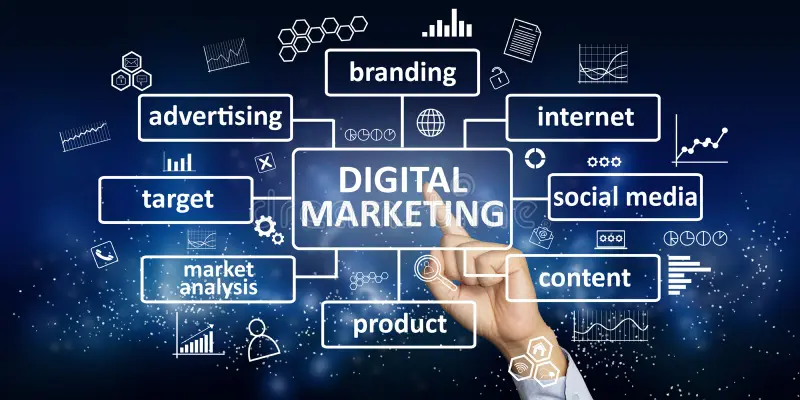
Digital marketing is the practice of promoting products, services, or brands through digital channels—such as search engines, social media, email, and websites—to connect with customers where they spend a significant portion of their time: online.
In 2026, the field has evolved from simply “being online” to creating highly personalized, AI-driven experiences. Here is a breakdown of how it works today:
1. The Core Pillars
Digital marketing is built on several specialized strategies that work together:
.Search Engine Optimization (SEO): The process of optimizing your website so it ranks higher in search results (like Google). Today, this focuses on “Search Intent”—understanding exactly what a user is looking for, rather than just matching keywords.
Content Marketing: Creating valuable, relevant content (blogs, videos, infographics) to attract and engage an audience. It’s about building trust by being helpful before asking for a sale.
Social Media Marketing: Using platforms like Instagram, LinkedIn, or TikTok to build a brand community. In 2026, short-form video and direct “social commerce” (buying directly within the app) are the dominant forces.
Pay-Per-Click (PPC): Paid advertisements that appear at the top of search results or on social feeds. You only pay when someone clicks on your ad.
Email & SMS Marketing: Direct communication with customers who have opted in. This remains one of the highest ROI (Return on Investment) activities because it targets people who already know your brand.
2. How it Has Changed (The 2026 Landscape)
Digital marketing is no longer just about “blasting” messages. It is now defined by:
AI-First Strategy: AI isn’t just a tool for writing; it’s the backbone of marketing. It predicts customer behavior, automates personalized email sequences, and optimizes ad budgets in real-time.
Hyper-Personalization: Customers now expect “Amazon-level” personalization. Marketing systems now use first-party data (information users share directly) to show products and content tailored to an individual’s specific journey.
Omnichannel Experience: A customer might see an ad on social media, read a blog on your website, and receive a discount via email. Digital marketing ensures the message is consistent and seamless across all these “touchpoints.”
Interactive Experiences: Tools like Augmented Reality (AR) allow users to “try on” clothes or see how furniture looks in their house before buying, bridging the gap between digital and physical.
3. Why It Matters
Unlike traditional marketing (like billboards or TV ads), digital marketing offers:
Measurability: You can see exactly how many people saw an ad, clicked it, and made a purchase.
Targeting: You can show your ads specifically to people of a certain age, in a specific location (like Noida), with specific interests.
Global Reach: A small business can reach a global audience with a relatively small budget.